

1. Preparation of photosensitive adhesive: The photosensitive adhesive directly produces photosensitive materials, which are commonly divided into single liquid and double liquid types. The single liquid photosensitive adhesive has already mixed the photosensitizer into the latex during production and can be used without preparation. The double liquid photosensitive adhesive first dissolves the photosensitizer in pure water according to the formula before use, and then mixes it thoroughly in the latex, stirring it evenly and leaving it for 1-2 hours. After the bubbles completely disappear, it can be used.
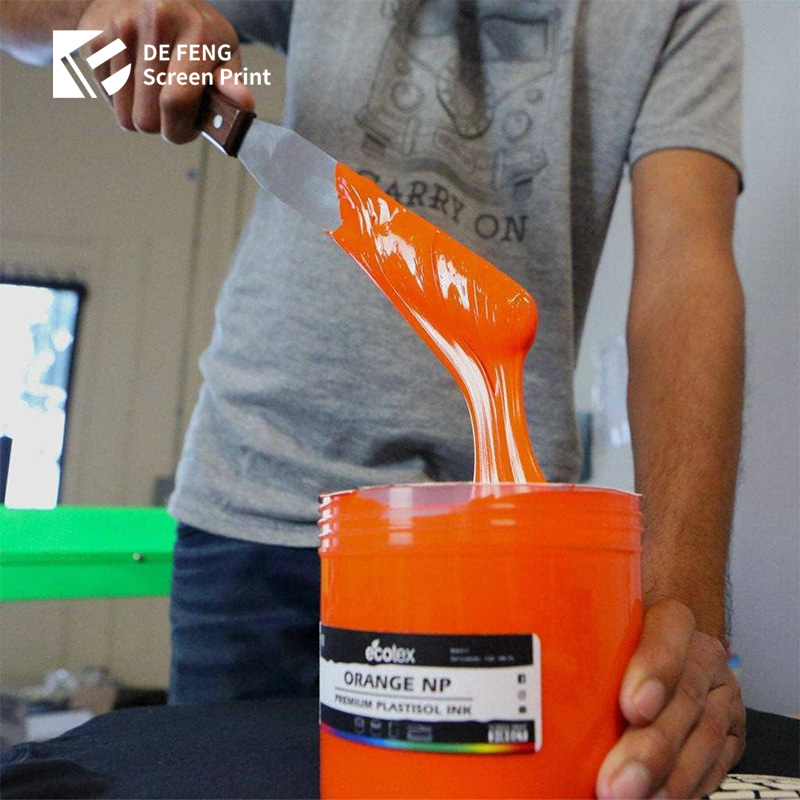
2. Use of photosensitive adhesive: It is commonly divided into two types: solvent resistant and water-resistant. Solvent resistant photosensitive adhesive, capable of withstanding various organic solvents, suitable for printing with oil-based inks; Waterproof photosensitive adhesive, suitable for printing with water-based inks (water-soluble printing coatings, such as textile printing pigments), the former of which can be recovered by screen stripping; The latter generally cannot be detached and recycled. Specialized water-resistant photosensitive adhesives include nylon photosensitive adhesive and diazo photosensitive adhesive. When using, the appropriate photosensitive adhesive must be selected according to the printing object and relevant instructions.
3. Coating: Use hand coating or coating machine to apply the stretched and degreased clean screen. When coating, avoid introducing bubbles into the scraper bucket, and dry at a temperature of 30-40 ℃. The film thickness depends on the requirements of the printed material and can be controlled by the number of coating processes.
4. Drying: Dry at 30-40 ℃.
5. Exposure: Stick the film substrate onto the P surface of the screen and expose it to ultraviolet light. The part exposed to ultraviolet light loses its water solubility, and the exposure time varies depending on the photosensitive adhesive, film thickness, mesh size, and exposure time. Refer to various exposure schedules and determine the optimal exposure time before exposure.
6. Attention: Insufficient exposure will reduce the screen's durability, while excessive exposure will affect the clarity of the image.
7. Development: Soak both sides of the exposed screen with clean water or place it in a water tank for 1-2 minutes. After removal, rinse the screen with a high-pressure water gun in a mist form (the parts exposed to ultraviolet light have photosensitive glue hardened on the screen, and the parts not exposed to ultraviolet light dissolve in water) until all patterns are developed clearly. Remove excess water with a pressure air gun, chicken skin cloth, etc.
8. Drying: Dry at 30-40 ℃.
9. Storage
Sensitive materials should be stored in a sealed manner. 1. Non sensitized: 12 months, sealed, dry, and dark place at 20-25 degrees Celsius, avoiding direct sunlight. Need to avoid high temperature and high humidity. Even with packaging, avoid direct sunlight exposure. 2. Sensitization: Approximately 6 weeks at 20-25 degrees Celsius. Coated screen: 4 weeks, in an environment of 20-25 degrees Celsius and darkness.